


The Centralization Crisis on the 19th-Century Ottoman-Iranian Border: The Sheikh Ubeydullah Nehri Uprising

The Middle East in the 19th Century
In the 19th century, nationalism/nation-building and colonial activity around the world gained pace. Nationalism, spreading from France, and colonialism, spreading from Britain, came to affect virtually the entire globe. The various nations within the empires became aware of their right to self-determination and rose up in pursuit of that aim. These uprisings gave birth to many new states. On the other hand, other great powers joined the colonial activity that had begun in Britain with the Industrial Revolution, and states such as Britain, the United States, France, Russia, and the Netherlands set out in search of raw materials and engaged in colonial activity in new territories. In the eyes of the colonial powers, the Middle East too was a region rich in raw materials, and these states began their activities here.
Broadly speaking, the 19th-century Middle East comprised the Ottoman Empire, Iran (the Qajar Dynasty), Egypt (the Kavalalı Dynasty), the emirates of the Arabian Peninsula, and the emirates of the Gulf region. In administrations other than the Ottoman and Iranian ones, Britain pursued an influential policy and shaped local rulers. The United States, although a young state at the time, was conducting missionary activity in Iran and established its first diplomatic relations with Iran, appointing a consul general and a chargé d'affaires there in 1882 (Dawes, 1887: 35). Even before that, however, envoys representing both Britain and Russia were present. The European powers operating here, mainly through missionary work, focused on internal interventions made through the Christians living in the region. Within the borders of the Ottoman Empire and Iran there were sizeable non-Muslim communities such as the Armenians and the Assyrians. The colonial powers, in order to secure the rights of the Christians of the region, sought to influence the workings of the governments there.
After being heavily defeated in the Ottoman–Russian War of 1877–1878, the Ottoman Empire sought to come to terms with Russia, and as a result the Treaty of San Stefano was signed in March 1878. This treaty contained very harsh provisions, granting Russia significant influence in the Balkans. Under the treaty the Ottomans were also to introduce reforms concerning the Armenians, and Kars, Ardahan, Artvin, Batum, Eleşkirt, and Doğubayazıt were to be ceded to Russia. Unwilling to accept these harsh provisions, the Ottomans took advantage of the European powers' unease at Russia's excessive influence and reached a new agreement with Britain, which culminated in the Treaty of Berlin in July 1878. The result was the near-erasure of the Ottoman presence in the Balkans, and after the Treaty of San Stefano nearly all of its provisions, with the exception of those relating to Eleşkirt, Doğubayazıt, and Crete, were implemented. The Treaty of Berlin likewise called for reforms concerning the Armenians, but no principality could be established as there was insufficient population there.
By the late 19th century, the Ottoman Empire was losing the wars it entered and was forced to accept harsh terms at the negotiating table. The heavy economic burden of war was being addressed through excessive taxation. As one can imagine, taxation weighed heavily on the population. Consequently, uprisings broke out among the peoples of the region. State officials sent to collect taxes were poorly received and met with resistance. Beyond economic concerns, the most pressing anxiety was that of security. The weakness of the central government allowed local leaders in distant regions to grow stronger or new minor leaders to emerge. A similar socio-economic situation existed in Iran. During this period there was a substantial British influence in Iran.
In the first half of the 1800s, the basic trade goods in Iran were of British origin, and by mid-century, as a result of competition among the colonial powers in these lands, the share of trade in Iran was split in two. Where previously Britain had held the entire share of Iranian trade, the share was now divided, with the Russians establishing a market in the north and the British in the south. In any case, a contest developed between Britain and Russia over the gains to be had from trade routes through Erzurum, Tbilisi, Trabzon, the Caspian Sea, and Sukhumi (Kaleli, 2003: 3-4). It is clear from this that the region, although formally Iranian and Ottoman territory, was being used by the colonial powers, which conducted by no means insignificant activities there. The treaties signed, the envoys and representatives sent, the schools opened, and the missionary work carried out were driven largely by economic and at times religious motivations.
As noted at the outset, then, as in many parts of the world, the Middle East—and particularly the Ottoman and Iranian sphere—was shaped by both colonial activity and nation-building consciousness. Nation-building can come about through a nation's self-awareness and the natural course of its activities, but it can also come about through the involvement of certain foreign actors. In this respect, developments arising from internal awakenings may serve the interests of foreign powers. Conversely, the activities that foreign powers carry out to advance their own aims may benefit or harm the structures within. In this framework, certain historical events that took place in the east and northeast of the Ottoman Empire stand as examples of these claims.
The Situation of the Armenians and the Security Concerns of the Kurdish Tribes in the Region
According to Article 61 of the Treaty of Berlin signed between the Ottoman Empire and Britain in 1878, reforms were to be carried out for the Armenians living in the so-called "Six Vilayets"—Erzurum, Van, Harput, Diyarbekir, Sivas, and Bitlis. These reforms were put on the agenda by the European powers on the stated rationale of guaranteeing the protection of the Christian Armenians against the Muslim Kurds and Circassians. According to the project drawn up in 1895 by the ambassadors of Britain, France, and Russia, Armenian political prisoners were to be amnestied, Armenians who had been forced into migration or exile were to be brought back, prisons and prisoners were to be inspected, a commissioner was to be appointed for the Six Vilayets, the damages of harmed Armenians were to be compensated, a supervisory commission was to be set up in Istanbul, religious conversion was to be regulated, the legal privileges granted to the Armenians were to be preserved, and the Armenians of Anatolia outside the Six Vilayets were to be taken into account (Turan and Görür, 2018: 328). Setting aside the question of relations between the Armenians and the Ottomans at the time, what is evident is that foreign states intervened in Ottoman internal affairs by way of their fellow Christians, the Armenians. At the same time, it is known that there were security concerns in the region that affected the Kurds as much as the Armenians.
At the start of the 1800s, when the Ottomans were searching for ways to cope economically with the European powers, they sought to solve their problems mainly by collecting more taxes. Under Mahmud II, the aim within the Ottoman lands was to eliminate local powers and strengthen the central government. By this means state officials could be sent to distant regions and every kind of tax could be collected. Before centralization, the Kurdish beys in Kurdistan were virtually the sole holders of power. These beys governed large tribes or tribal confederations. Their loyalty to the Ottomans was nominal. The Botan, Baban, and Hakkari tribal confederations, which were also rivals of one another, were the most prominent. In the first half of the century the Ottomans broke the power of these tribes by attacking them, and in 1847 the influence of the Botan confederation—the last semi-independent emirate, ruled by the Bedirhan family—was also broken (Özoğlu, 2009: 97), after which a power vacuum persisted until the emergence of Sheikh Ubeydullah.
Sheikh Ubeydullah as a Leader
In 1826 the Ottomans appointed Reşid Mehmet Pasha, Governor of Sivas, with the task of neutralizing the Kurdish tribes and appointing state-designated governors to the regions they ruled. Following this appointment and its consequences, uprisings broke out in many places in 1830 (Minorsky, 2004: 99). Once the power of the semi-independent Kurdish emirates was broken, lawlessness was triggered in Kurdistan and the existing order collapsed. The Ottomans had broken the influence of the emirates but had not strengthened the central government. The state's inability to project power into the remote parts of Kurdistan and to control the Kurds fully rendered the new system inoperative. As a result, the regions formerly under the control of confederations such as Baban, Soran, Botan, Hakkari, and Behdinan were plundered by smaller tribes that were now stronger than they had been, and disorder prevailed. In this atmosphere of insecurity, trade also ground nearly to a halt. During the years in which this power vacuum persisted, the figure of the sheikh took the place of the old Kurdish beys. Sheikhs holding political power was, until those years, a rare phenomenon in the Kurdish geography (Jwaideh, 1999: 143-144). The effective role of sheikhs in the Kurdish lands had previously been understood only in a religious sense. With Sheikh Ubeydullah, however, this influence acquired both a religious and a political identity.
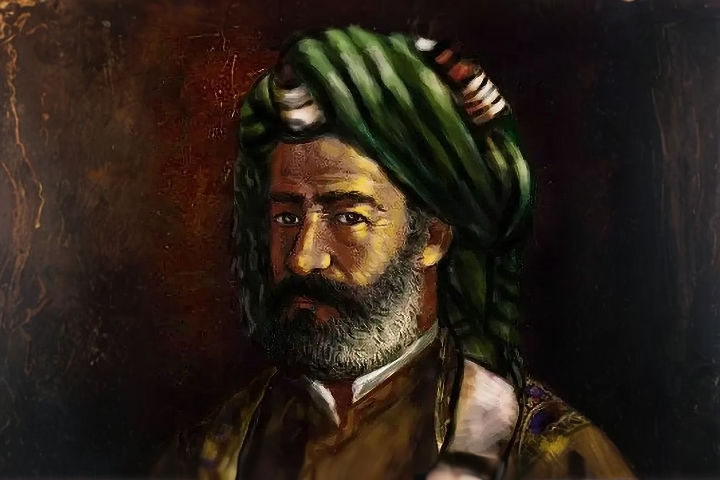
The history of Sufi orders among the Kurds and in Kurdistan reaches back to the earliest period in which Sufism and the orders rose. The orders prevalent among the Turkmen and the Kurds are partly shared, and the oldest of these reach back to Safiyüddin Erdebilî, who also gave his name to the Safavids. Throughout their history, the most influential orders in Kurdistan have been the Naqshbandi and the Qadiri (McDowall, 2004: 84-85). Although McDowall, in the same place, states that Sheikh Ubeydullah was affiliated with the Qadiri order, there is some confusion on this point. Many sources record that the Sheikh was a Naqshbandi (Celil, 1998: 31; Jwaideh, 1999: 146; Minorsky, 2004: 100-101). Sheikh Ubeydullah was as influential by family as he was by his religious standing. His father was Sheikh Taha, from one of the powerful families of Şemdinli. His uncle, Sheikh Salih, had headed the Naqshbandi order before him. Hence, even before his political activities, Sheikh Ubeydullah occupied a position of considerable status. Indeed, he himself succeeded his uncle as head of the Naqshbandi order (Jwaideh, 1999: 146). Furthermore, by the 1880s the Şemdinan family, to which Sheikh Ubeydullah belonged, had acquired vast estates from both the Ottomans and Iran. What made it possible for them to acquire these estates was the donations of the disciples of their sheikhs—who came from one of the foremost Naqshbandi families of Kurdistan—and the tobacco trade in which the family was engaged. The vast estates expanded their sphere of influence. From the 1850s onward, the Şemdinan family became the political, military, and religious leaders of the Kurds. In this respect they came to hold rights of oversight over a wide region in southeastern Anatolia and northwestern Iran (Özoğlu, 2009: 95-96). The great majority of the Kurds living in Shiite Iran were of the Sunni branch, and Sheikh Ubeydullah's standing among them was extremely high.
Aware of the socio-economic situation of the period, the Sheikh was particularly troubled by the economic and administrative state of affairs. After the tribes were dispersed, the Kurds were left without leadership. With neither the Ottoman nor the Iranian government attending to the problems of the Kurds, the Kurds came to feel the need for a new political structure in the regions they inhabited. After the Treaty of Berlin gave the Armenians—who up to that point had lived under the rule of the Kurdish emirates—a promise of statehood, Sheikh Ubeydullah arrived definitively at the idea of launching an uprising and founding an independent Kurdish state. In July 1880, the Sheikh gathered all the prominent sheikhs of Kurdistan in Şemdinan and convened a council. At this council the terms of a general union among all the Kurdish tribes were set out. With this Kurdish union, agreed upon as part of the preparations for the uprising, the Sheikh—judging from past experience that he could not wage war against the Ottomans and found an independent Kurdish state—chose Iran as his initial point of action. Another reason for this choice was that Iran was at that time at war with the Turkmen. In line with the decisions taken at the council, the leaders that same day dispatched their experienced men to Khoy, Urmia, Salmas, and other cities to procure arms and ammunition (Averyanov, 2010: 187-189). As a military commander, Sheikh Ubeydullah brought together the individuals and groups under his command. He also acted strategically in his first strike, attacking an Iran preoccupied with other problems.
The Sheikh Ubeydullah Nehri Uprising and Its Aftermath
In October 1880 the Sheikh organized an army consisting of three main columns for the uprising. The first column was led by Sheikh Abdülkadir, son of Sheikh Ubeydullah, with the support of Hamza Agha, the leader of the Mukri—a Kurdish tribe in Iran. This column's objective was to seize Sawjbulagh (Mahabad) and Tabriz. The second column was led by Sheikh Muhammad Sadiq, another son of the Sheikh, whose objective was to capture Urmia. The third and final column was led by Muhammad Said of the Biradost tribe, with the objective of seizing Salmas, Khoy, and the areas west of Lake Urmia. The Sheikh himself would direct the second and third columns (Sarıkçıoğlu, 2013: 17). The column under Hamza Agha and Sheikh Abdülkadir advanced especially easily.
The uprising began in September 1880, and the areas along the northern Ottoman–Iranian border were seized with ease. The column led by Hamza Agha and Sheikh Abdülkadir reached the Mergaver region by the second day. The Kurdish leader Mahmut Agha, a resident of Mergaver, joined the uprising with 500–600 men. The advancing columns were joined by a further 400-strong contingent from Uşnu; on 10 September the town of Mangur was taken and more than 1,000 cavalry joined the insurgents there. By 15 September the insurgents had advanced as far as Lahican on the shores of the Caspian, the home of the Piran tribe, which was the most committed to the Kurdish union. The Piran tribe supported the uprising with 2,000 infantry and 1,000 cavalry. The uprising clearly spread rapidly across the Kurdish-inhabited areas of Iran. Apart from how quickly the Kurds raised soldiers and grew in number in the places they took and were supported in, the inability of Iran's border troops to put up resistance and their retreat accelerated the process, and by the first half of September the towns of Lahican and Sardasht had been taken entirely. By this point the insurgents had taken—without encountering resistance—Mahabad, the largest city of Iranian Kurdistan, which in the sources is most often referred to as "Sawjbulagh" (Celil, 1998: 35). The uprising thus began in the southwest of Lake Urmia and spread as far as Mahabad, Miandoab, and Maragheh. The area initially seized was roughly 20,000 square kilometers.
As this large and disorderly first column drew near Tabriz, both the people of Tabriz and the Iranian government became alarmed. The first column of the insurgent army had made significant progress. According to Celil, Sheikh Abdülkadir, who led the column, took every measure to safeguard the lives and property of civilians; the Russians in the area were placed under his personal protection, and judges were swiftly appointed in the seized regions. After the capture of Sawjbulagh, a provisional government was established (Celil, 1998: 35). After Maragu/Maragheh was taken and the troops deployed before Tabriz, a large part of the units under Hamza Agha's command in particular turned to looting. Some units also tried to hide the spoils they had taken during the fighting or to carry them home. As a result the columns dispersed and disorder set in. Meanwhile Ubeydullah, instead of moving on Tabriz—now nearly within reach—made the grave mistake of turning toward areas of secondary importance (Averyanov, 2010: 190). This perhaps altered the entire course of the uprising.
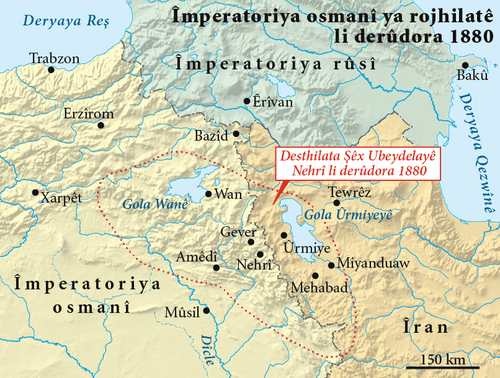
On learning that Sheikh Abdülkadir and Hamza Agha were advancing swiftly and successfully toward Tabriz, Sheikh Ubeydullah also laid siege to Urmia. Sheikh Sadiq, who had been threatening Urmia with 1,000 men since the beginning of the uprising, was joined by his father Sheikh Ubeydullah, and the column became a united force of 8,000. Although the people of Urmia, aware of the insurgents' other advances, put up only minor resistance, they wished to reach a peace and surrender. The notables and religious leaders of the city agreed to surrender on the condition that the lives of the inhabitants be spared. When the appointed day of surrender came, the Governor of Urmia, Iqbal ad-Dawla, requested an extension of the surrender date. The Sheikh, who initially refused this offer, was persuaded by his close friend, the American missionary Dr. Joseph Plumb Cochran. During this 24-hour delay the Governor completed the necessary defensive preparations and held out. In fighting that lasted three days and three nights, Sheikh Ubeydullah and his army were unable to prevail (Wilson, 1895: 114-115). On the morning of 1 November the Kurdish forces withdrew and turned toward the mountains; by 4 November they had withdrawn entirely, and Teymür/Timur Pasha began preparations to attack the Kurds on Iran's behalf. As the Kurds retreated they engaged in plunder and looting, and the Iranian forces on the offensive caused similar destruction (Speer, 1911: 90-92). The insurgents attacked in particular those Shiites who had not supported them, while the Iranian forces attacked villages that had supported the Sheikh. Between these two opposing forces, Shiite Persians and Turks, Sunni Kurds, Armenians, and Assyrians all suffered.
The Sheikh Ubeydullah uprising ended in failure, and the forces that had been raised were routed. After the uprising ended, claims that American missionaries had cooperated with the Kurds were brought to the fore (Jwaideh, 1999: 178). Britain's swift and consistent diplomatic moves rescued the missionaries from this dangerous position. The close friendship between the American missionary Dr. Cochran and Sheikh Ubeydullah is well known. Before the uprising, the Sheikh had communicated with representatives of Western powers through letters and messengers. Although it was Dr. Cochran who arranged the 24-hour delay in the surrender of Urmia—a delay that played a significant part in the uprising's failure—Iran nonetheless engaged in propaganda alleging that the missionaries had cooperated with the Kurds. According to the sources, however, the Sheikh's uprising failed because of the hesitation of allies such as the Ottomans and Britain and because the uprising was not in the interest of powers such as Russia (Nehri, 2022: 76).
After the failure of the uprising and the completion of the withdrawal, the Sheikh returned to his headquarters in Hakkari, at Nehri. Following pressure from the international powers on the Ottomans, he was exiled to Istanbul in July 1881. The Sheikh was received as a hero wherever he went, and was welcomed in Istanbul with ceremony. After staying there for a few months he escaped back to Nehri, and when troops were dispatched against him he agreed to be exiled to the Hejaz. Sheikh Ubeydullah Nehri died in Mecca in 1883. The place of his death is not certain; Mecca, Taif, and Medina are all mentioned in this regard (Jwaideh, 1999: 178). Records in the Ottoman Archives of the Directorate of State Archives (BOA) document that the Sheikh, upon his exile to Medina on 26 September 1882, was granted a salary (BOA, 7/90), and that even after his death his salary was paid to his son Abdülkadir in 1896 (BOA, 885/66336).

There were reasons for the Ottomans' relatively "lenient" treatment of a rebellious sheikh. The first of these is that during the Ottoman–Russian War Sheikh Ubeydullah had formally commanded a Kurdish unit serving in the Ottoman ranks (Jwaideh, 1999; Özoğlu, 2009). Another is that after his father and uncle, the Sheikh took charge of the Nehri Lodge in 1873 and was therefore regarded as a holy figure in the region. Directly related to the uprising are the correspondences in which the Sheikh expressed his regret for the cruelties, killings, and lootings carried out during or after the uprising. The Sheikh accepted that injustices had been carried out in his name, offered his apologies, stated that he had not been fully aware of the wrongs done, and declared his loyalty to the Ottomans. After this tactical move, the Sheikh's standing in the eyes of the Ottomans rose further. The exile conditions he experienced within Ottoman lands were not adverse, either.
Conclusion
Sheikh Ubeydullah Nehri was born in 1827 and, at a young age in 1864, took charge of his lodge. Probably in those years he was already beginning to add a political role to the social and religious standing he already held. Through his correspondence with the American missionary Dr. Cochran and other foreigners, he had absorbed the winds of nationalism. In these letters it is stressed that the Kurds, like other nations, are a nation, that they have distinct languages and cultures in the regions in which they live, and that they have a sizeable population. The Sheikh's efforts in 1880 to gather Kurdish religious leaders and tribal chiefs in a council and to unite them under a Kurdish consciousness are striking in their own right. Whether the movement led by Sheikh Ubeydullah was nationalist remains a matter of debate among researchers; the views he expressed above provide the basis on which scholars in the Jwaideh and McDowall line regard him as a Kurdish nationalist and his uprising as a conscious nationalist uprising. As has been argued, his criticism of Iran on the grounds of Shiism and of the Ottomans on the grounds of the caliphate—on the basis that neither truly represented Islam—was a propaganda argument for his movement.
The uprising of 1880, made up of disparate and unprofessional military units, seized a considerable area within Iran. The primary objective was to capture the regions—falling today on the borders of Azerbaijan—rich in trade routes and fertile land, and to secure financial support from them for subsequent uprisings. However, the troops that entered this area, in particular those under Hamza Agha's command, became intoxicated with victory and lapsed into looting, abandonment of their assigned areas, disobedience to orders, and other amateur failings. While these failings are the greatest cause of the uprising's failure, the causes are not limited to them. After the first column rapidly advanced as far as Tabriz and then halted, Sheikh Ubeydullah, instead of reinforcing it with a separate column, attacked Urmia.
Had the Sheikh reinforced the units commanded by his son Abdülkadir and Hamza Agha at Tabriz, this could have altered the course of the uprising. With the Sheikh's arrival at Tabriz, two-thirds of the insurgent army would have come together, and the city—already on the verge of surrender—would have fallen. Moreover, the Sheikh, the main figure bringing together all the tribal and religious leaders, would, by being there among the troops, have prevented the amateur failings the soldiers were making. The Sheikh, regarded as a holy figure by the Kurds of the period, would naturally have been obeyed unconditionally. But the Sheikh did not go to Tabriz, and on the strength of the news he received he too laid siege to Urmia. As a second mistake, Sheikh Ubeydullah agreed, at the request of his American friend Dr. Cochran, to extend the surrender deadline for the city. Iranian officials, given time, completed their preparations and broke the siege. As a result the insurgents withdrew, and those remaining returned to their homes in Iran and the Ottoman lands.
Because the Sheikh, regarded by Iran as a dangerous rebel, was residing in neighboring Ottoman territory—and indeed in a border region such as Hakkari—Iran's discomfort led to international pressure that resulted in the Sheikh's removal from the border. Britain in particular pressed the Ottomans on this matter. The interests of the United States should be considered as part of British interests. The United States developed its relations in order to protect its citizens in Iran—who were largely missionaries—and to use Iran as a market for American goods. The fact that the leader of the uprising, Sheikh Ubeydullah, was an Ottoman citizen turned the uprising into an international issue. Britain sought to prevent the disintegration of the Ottoman Empire and to maintain the status quo, while Russia, by contrast, sought to turn the status quo to its own advantage by supporting Iran. The Sheikh's friendly treatment of the Americans before and during the uprising, and the friendship that developed between them, gave rise in Iran to the idea that the uprising had been organized by the United States. Because the attacks were directed from Ottoman lands, Iran and Russia thought that the Ottomans had supported the uprising. As a result, under British pressure, the Ottomans sent the Sheikh into exile, and the Sheikh died of natural causes shortly thereafter.
References
BOA, BEO. File No: 885, Folder No: 66336, Date 1314.
BOA, Y..PRK.BŞK. File No: 7, Folder No: 90, Date 1298.
Celil, C., Gasaratyan, M. A., Jegalina, O. İ., Lazarev, M. S., and Xidoye Mıhoyan, Ş. (1998). Yeni ve Yakın Çağda Kürt Siyaset Tarihi. (Trans. M. Aras). Peri.
Dawes, R. R. (1887). A History of thе Establishment of Diplomatic Relations With Persia. E. R. Aldeeman & Sons.
Jwaideh, W. (1999). Kürt Milliyetçiliğinin Tarihi: Kökenleri ve Gelişimi. (Trans. İ. Çekem and A. Duman). İletişim.
Kaleli, H. (2003). 19. Yüzyılda İran Transit Ticaret Yolu için Osmanlı - Rus Rekabeti. Dumlupınar Üniversitesi Sosyal Bilimler Dergisi, 9, 1-19. https://izlik.org/JA68ZW99YN
McDowall, D. (2004). Modern Kürt Tarihi. (Trans. M. Domaniç). Doruk.
Minorsky, V., Bois, Th., and Mc Kenzie. (2004). Kürtler ve Kürdistan. (Trans. K. Fıratlı). Doz.
Nehrî, Ş. U. (2022). Tuhfetü'l Ahbâb (Mesnevî-i Sânî). (Ed. Veysel Başçı). Avesta.
Özoğlu, H. (2009). Osmanlı Devleti ve Kürt Milliyetçiliği. (Trans. N. Özok Gündoğan and A. Z. Gündoğan). Kitap.
Sarıkçıoğlu, M. (2013). İran Arşivlerine Göre Şeyh Ubeydullah İsyanı. Kilis 7 Aralık Üniversitesi Sosyal Bilimler Dergisi, 3(5), 1-35. https://izlik.org/JA38TM87JC
Speer, R. E. (1911). The Foreign Doctor. Fleming H. Revell Company.
Turan, M. and Görür, E. D. (2018). İngiltere'nin Anadolu Genel Konsolosu Charles William Wilson ile Erzurum Konsolosu Henry Trotter'ın Ermenilerle Meskûn Bölgelerin Islahına Yönelik Hazırladıkları Islahat Projeleri. OTAM Ankara Üniversitesi Osmanlı Tarihi Araştırma ve Uygulama Merkezi Dergisi, 44, 311-340. https://izlik.org/JA84YY36KC
Wilson, S. G. (1895). Persian Life and Customs. Fleming H. Revell Company.


Comments